


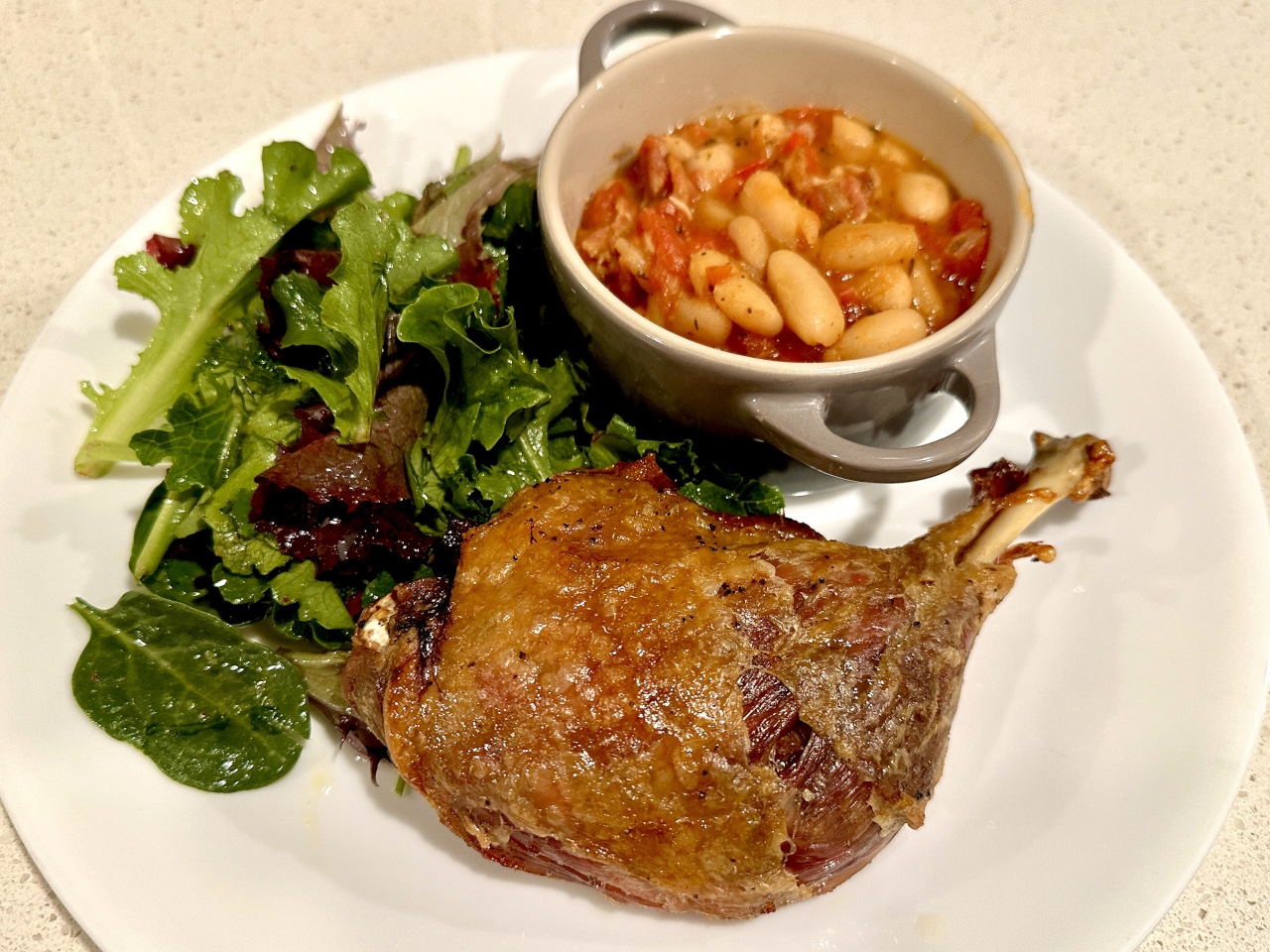
Duck Confit
Duck legs are slowly cured in salt, garlic, and herbs to season the meat and draw out moisture, then gently cooked in their own rendered fat at low temperature. The slow cooking process tenderizes the meat while infusing it with rich, savory flavors from the herbs and fat. Traditional techniques ensure the meat remains flavorful and succulent.
After cooking, the duck is stored in the fat, which preserves it and enhances flavor. The skin crisps when seared or roasted before serving, while the meat inside remains tender and moist. The preparation emphasizes slow curing, low-temperature cooking, and preservation, producing deeply savory, melt-in-the-mouth duck confit.
 Duck
Duck French
Equipment
- small dutch oven
- baking sheet
Ingredients
- 2 duck legs
- 1 Tbsp. coarse Kosher salt
- 1 Tbsp. coarse black pepper
- 1 head garlic
- ½ cup water
Instructions
Prep
- Using a sharp knife, puncture the skin and fatty areas of the duck legs all over to perforate the skin and allow the fats to render out.
- Sprinkle coarse salt and pepper liberally on all sides of the duck legs.
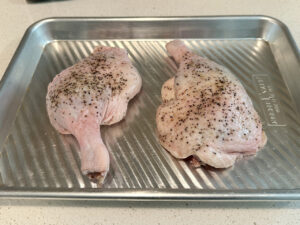
- Seal the duck in a large plastic bag and place in the refrigerator for 24 hours.
Render
- Preheat the oven to 250°F.
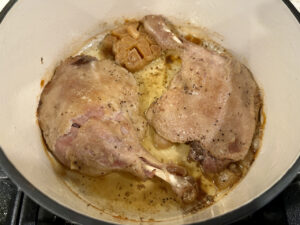
- Place the duck legs, skin side down, in a small dutch oven.
- Cut a head of unpeeled garlic in half and place each half in the dutch oven.
- Pour in water to cover the bottom of the pot.
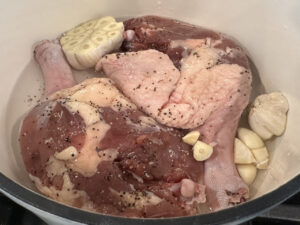
- Place in the oven and let the duck legs render for 2 hours.
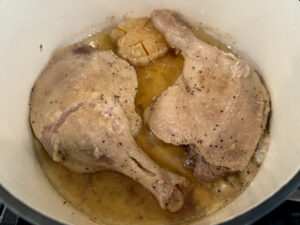
- Remove the duck from the oven, turn the legs so the skin side is facing up, and return to the oven for another 2 hours.
Finish
- Increase the temperature of the oven to 450°F.
- Arrange the duck legs, skin side up, on a baking sheet.
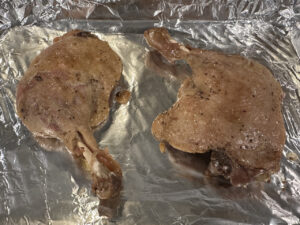
- Bake the duck legs at 450°F for 20 to 25 minutes, until the skin is golden brown and crispy.
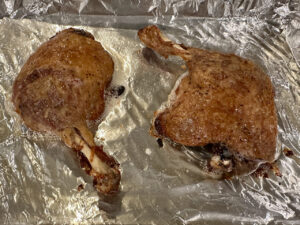
- While the duck legs are crisping, strain the duck fat from the dutch oven and save for future use.
- Serve the duck confit with greens, white bean cassoulet, or roasted root vegetables.