


Fresh Pasta
A simple dough of flour and eggs is kneaded until smooth, then rolled and cut into sheets or strands to create fresh pasta. The high egg content gives the dough a rich color, tender texture, and slight elasticity. Freshly made pasta cooks quickly and provides a delicate, silky bite compared with dried varieties.
After shaping, the pasta can be boiled, sautéed, or baked with sauces. Its porous texture allows it to absorb flavors effectively, enhancing the dish it accompanies. The preparation emphasizes careful mixing, kneading, and rolling to achieve consistent thickness, tender texture, and traditional Italian quality.
 Pasta
Pasta Italian
 Servings: 4
Equipment
- pasta machine
Ingredients
- 3 large eggs (approx. 150g without shells)
- 65 g semolina flour (6 Tbsp.)
- 185 g all purpose or 00 flour (1½ cup)
- 1½ tsp. olive oil
Instructions
Pasta Dough
- Crack the eggs into a bowl and weigh. 3 large eggs should weigh approximately 150g.
- In a separate bowl, weigh out enough flour to be equal to 1.64 times the weight of the eggs (250g) at a ratio of 3 parts white flour (185g) to 1 part semolina (65g).
- Place the flour in a large bowl and form a volcano shape.
- Whisk the eggs together and pour into the center of the volcano.
- Add olive oil to the eggs.
- With a fork, mix together the flour, eggs, and oil until combined into a shaggy dough.
- Use one hand and continue combining the dough until all the flour is mixed in.
- Once the dough ball is solid, remove from the bowl and flatten the ball of dough onto a lightly floured surface.
- Knead the dough by pressing down three times with the heel of the palm.
- Rotate the dough 90°, fold the dough back on itself.
- Repeat the kneading process for about 10 minutes until the ball of dough is solid but stretchy and springs back when lightly pressed with the thumb.
- Once the kneading is complete, wrap the ball of dough is plastic wrap and let it sit at room temperature for 30 minutes.
Rolling Pasta
- Cut the dough into four equal parts.
- Press out one ball of dough into a flat rectangle. Leave the unused balls of dough covered to stay fresh.
- Set the pasta machine to its largest setting (0) and feed the dough through.
- Fold the edges of the pasta sheet into the center to form a rectangular shape and feed through the machine again.
- Fold any uneven edges over and feed through the machine for a third pass.
- Reduce the machine setting one size and feed the dough through again.
- Continue reducing the machine setting and passing the dough through until it reaches the desired thickness.
Tagliolini
- Line a baking sheet with parchment and dust lightly with flour.
- Roll out the dough sheets to a thickness of 8 or 9.
- Cut the sheets to desired length.
- Feed the cut sheets through the tagliolini cutter on the pasta machine.
- Lay out the cut tagliolini on the baking sheet and dust the pasta lightly with flour.
- Allow the tagliolini to dry for an hour or two before portioning. Cook immediately, refrigerate for 2-3 days or freeze for future use.
Fettucine
- Line a baking sheet with parchment and dust lightly with flour.
- Roll out the dough sheets to a thickness of 6.
- Cut the sheets to desired length.
- Feed the cut sheets through the fettucini cutter on the pasta machine.
- Lay out the cut fettucini on the baking sheet and dust the pasta lightly with flour.
- Allow the fettucini to dry for an hour or two before portioning. Cook immediately, refrigerate for 2-3 days or freeze for future use.
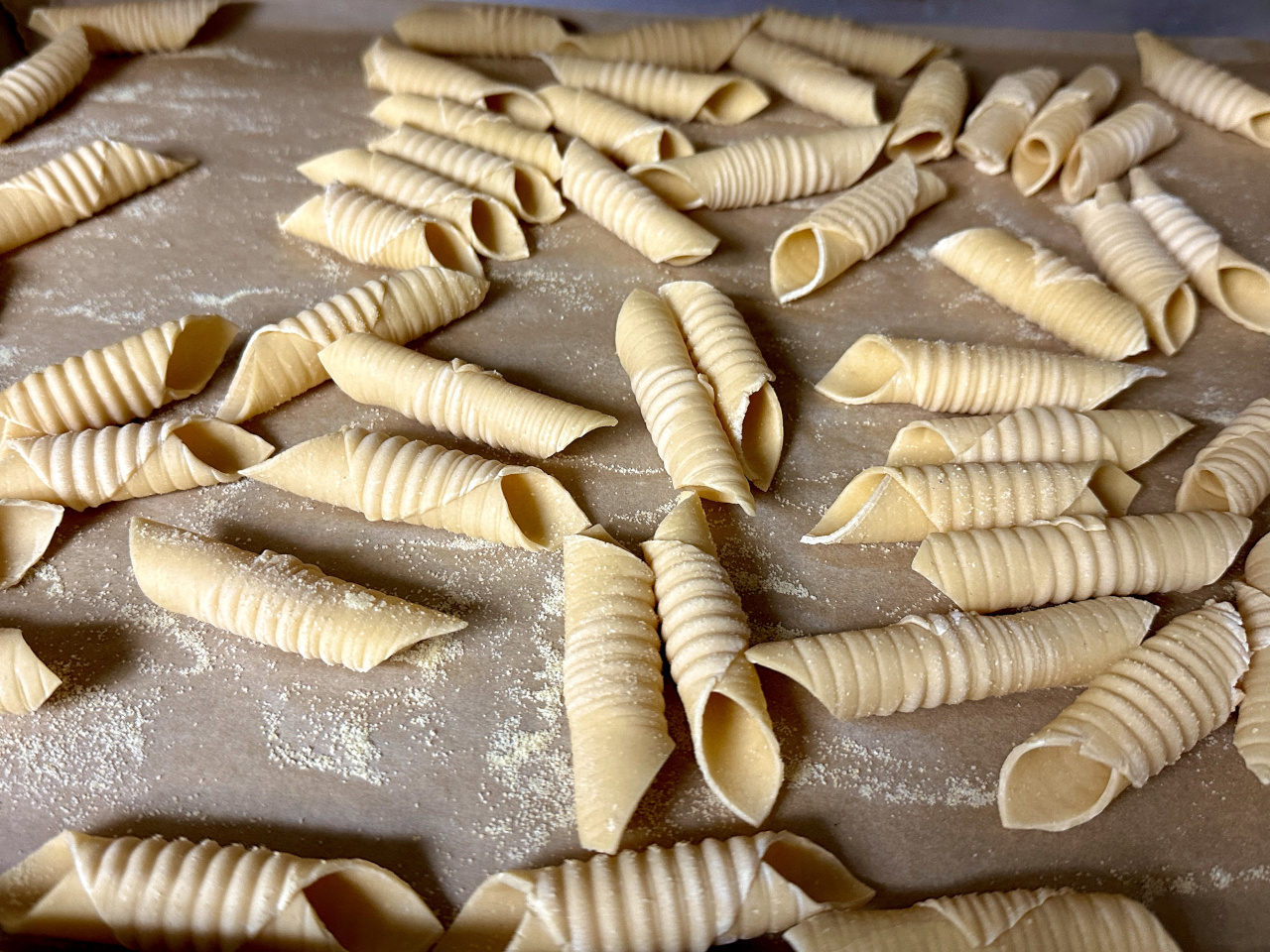
Garganelli
- Line a baking sheet with parchment and dust lightly with flour.
- Roll out the dough sheets to a thickness of 6.
- Cut the sheets to into 1½ to 2-inch squares.
- Position a diamond of pasta dough on a grooved gnocchi board and roll around a small dowel to form a cylinder with grooves on the outside.
- Lay out the formed garganelli on the baking sheet.
- Allow the garganelli to dry for an hour or two before portioning. Cook immediately, refrigerate for 2-3 days or freeze for future use.